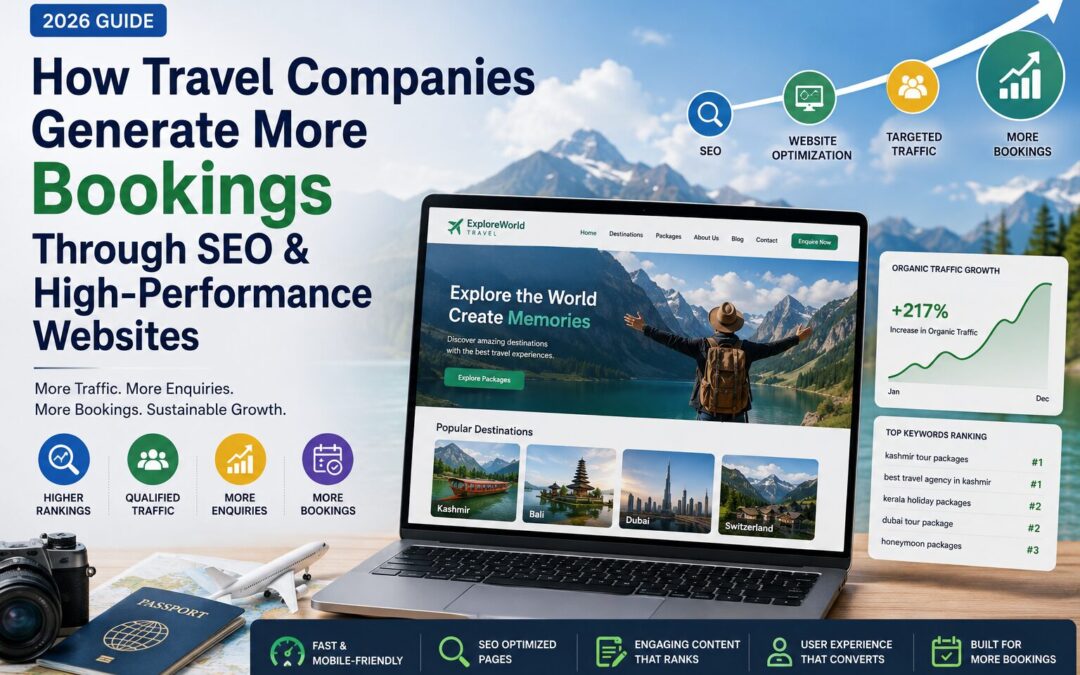
In today’s digital world, a travel company’s success depends on far more than offering attractive tour packages or competitive prices. Before a traveler contacts your agency, compares itineraries, or books a holiday, they almost always start by searching Google.
Whether someone is looking for a Kashmir tour package, a honeymoon in Bali, an adventure trip to Ladakh, or a luxury vacation in Dubai, the first interaction usually happens online. This makes your website one of the most valuable business assets you own.
However, simply having a website isn’t enough.
I’ve seen many travel agencies invest in beautiful website designs only to receive very few enquiries because their websites weren’t optimized for search engines, loaded slowly, or failed to provide the information travelers were looking for.
A high-performance website combined with a well-planned SEO strategy can completely change that.
Instead of relying only on paid advertisements or social media campaigns, travel companies can build a steady flow of organic traffic, attract highly targeted visitors, and convert them into genuine enquiries and confirmed bookings.
In this comprehensive guide, I’ll explain how travel companies can use modern website development, technical SEO, content marketing, and user experience to generate more bookings through Google and other search engines. The strategies shared here are based on real-world experience, practical implementation, and proven SEO principles that continue to work in 2026.
My Experience Building Travel Websites That Generate Business
Over the last few years, I’ve had the privilege of working with travel agencies, tour operators, hotels, and tourism businesses, helping them build websites that do much more than look attractive. My focus has always been on creating websites that are fast, SEO-friendly, user-focused, and capable of generating consistent enquiries.
During my journey as a web developer and SEO specialist, I’ve worked on projects for Astera Tours, Hirfah Holidays, Green Kashmir Travels, Kashmir Holiday Lab, Saffron Travels India, MyKashmirTour, Mazda Tour and Travels, High Rank Tour and Travels, Zarbaf Travels, and many other travel and hospitality brands.
Every project presented unique challenges.
Some businesses wanted to improve their Google rankings. Others were looking to generate more enquiries without increasing their advertising budget. Some needed a complete website redesign because their existing website wasn’t converting visitors into customers despite receiving traffic.
One lesson has remained consistent across every project:
A beautiful website without SEO rarely generates consistent business.
Likewise, SEO alone isn’t enough if visitors land on a slow, outdated, or confusing website.
The most successful travel businesses combine three essential elements:
A fast and reliable website
A well-planned SEO strategy
Helpful content that answers travelers’ questions
I’ve personally seen how improvements such as better website speed, optimized destination pages, proper keyword targeting, improved internal linking, mobile responsiveness, and structured content can significantly increase user engagement and enquiry rates.
These experiences have shaped the strategies I’m sharing throughout this guide. Everything you’ll read is based on practical implementation, continuous testing, and real client work, not just theory.
If you’re a travel agency owner, tour operator, or tourism business looking to grow online, these are the same principles I recommend and implement for every travel website I develop.
Why SEO and High-Performance Websites Matter for Travel Companies
The travel industry is one of the most competitive industries online.
Every day, thousands of travelers search Google for destinations, hotels, holiday packages, transportation, visa information, trekking routes, honeymoon packages, and travel guides.
When your website appears on the first page of search results, you’re not simply receiving visitors; you are reaching people who are actively planning a trip and are much more likely to become customers.
A well-optimized travel website works for your business around the clock by:
Attracting qualified visitors through Google Search
Building trust with professional design and valuable content
Generating enquiries through contact forms and WhatsApp
Increasing direct bookings
Reducing dependence on paid advertising
Strengthening your brand’s online presence
Think of your website as your digital salesperson. It never sleeps; it answers customer questions through your content, showcases your services, and encourages visitors to take the next step.
When combined with SEO, your website becomes one of the most effective long-term marketing investments your business can make.
What You’ll Learn in This Guide
Throughout this guide, you’ll discover:
How SEO helps travel companies attract qualified visitors.
Why website speed directly impacts enquiries and bookings.
The essential features every modern travel website should include.
How destination-specific content improves Google rankings.
Ways to increase trust and conversions through better user experience.
The importance of technical SEO, Core Web Vitals, and mobile optimization.
Strategies for converting website visitors into paying customers.
How AI-powered search is changing the future of travel SEO.
Whether you’re launching a new travel website or improving an existing one, the goal is the same: create a website that ranks well, delivers an exceptional experience, and consistently generates business.
The following sections will walk you through each step in detail, using practical strategies that I’ve successfully applied across multiple travel website projects.
Frequently Asked Questions
Does SEO really help travel companies get more bookings?
Yes, absolutely. In my experience, SEO is one of the most effective long-term investments a travel company can make. Unlike paid advertising, where traffic stops as soon as your budget runs out, SEO helps your website attract visitors consistently over time. When your travel website ranks for relevant keywords like destination guides, tour packages, and travel services, you’re reaching people who are already planning a trip and are more likely to become customers.
How long does it take for SEO to start generating results for a travel website?
SEO isn’t an overnight solution. Depending on your website’s current condition, competition, and content quality, you may start seeing improvements within three to six months. More competitive destinations and keywords often take longer, but the results are usually more sustainable than relying only on paid advertising.
Why isn’t my travel website generating enquiries even though it looks professional?
This is something I’ve seen quite often. A beautiful design alone doesn’t guarantee business. If your website isn’t ranking on Google, loads slowly, has poor user experience, or doesn’t answer the questions travelers are searching for, visitors may leave without contacting you. A successful travel website combines attractive design, SEO, fast performance, and clear calls to action.
Is having a website better than relying only on social media?
Yes. Social media is an excellent marketing channel, but you don’t own those platforms. Your website is your digital business headquarters. It allows you to control your content, improve your search rankings, collect enquiries, accept bookings, and build long-term authority for your travel brand.
What are the most important pages every travel website should have?
A well-structured travel website should include a homepage, destination pages, tour package pages, an About Us page, contact information, customer testimonials, a travel blog, frequently asked questions, and booking or enquiry forms. These pages help both users and search engines understand your business.
How does a high-performance website improve bookings?
Website speed directly affects user experience. If a website takes too long to load, many visitors leave before exploring your tour packages. A fast, mobile-friendly website keeps visitors engaged, improves Google rankings, and increases the chances that they’ll submit an enquiry or complete a booking.
Should travel companies invest in blogging?
Definitely. Publishing helpful travel guides, destination articles, itinerary suggestions, visa information, seasonal travel tips, and local experiences can attract thousands of visitors through Google. These visitors often become future customers because your content answers their questions before they’re ready to book.
Which platform is best for building a travel website?
The right platform depends on your business goals. For most travel agencies and tour operators, WordPress offers excellent flexibility, SEO capabilities, and scalability. If your business requires advanced booking systems or custom functionality, a tailored solution may be the better choice.
What is the biggest SEO mistake travel companies make?
One of the most common mistakes is creating only package pages and expecting them to rank. Travelers search for much more than tour packages. They look for destination guides, travel tips, itineraries, weather information, local attractions, and budget advice. Creating useful content around these topics helps attract visitors much earlier in their decision-making process.
Do Google reviews and testimonials help SEO?
While reviews aren’t a direct ranking factor for every search result, they build trust, improve local visibility, and encourage more people to choose your business. Positive reviews also increase click-through rates because travelers naturally prefer companies with strong reputations.
Can AI replace SEO for travel companies?
AI is transforming how people discover information, but it hasn’t replaced SEO. In fact, AI-powered search experiences often rely on high-quality, trustworthy websites when generating answers. Travel companies that publish original content, demonstrate real expertise, and maintain technically strong websites are more likely to be referenced by AI platforms.
How often should I update my travel website?
Your website should never remain static. Review tour packages, pricing, destination information, blog articles, and images regularly. Search engines tend to favor websites that remain accurate, helpful, and up to date. Even small improvements every month can make a noticeable difference over time.
What is the first thing I should improve if my travel website isn’t performing well?
Start with a website audit. Check your loading speed, mobile usability, technical SEO, content quality, internal linking, and user experience. Once you identify the biggest issues, prioritize the changes that will have the greatest impact on visibility and conversions. Improving the foundations first often delivers better long-term results than chasing quick fixes.
Is SEO still worth investing in for travel companies in 2026?
Absolutely. Travelers continue to use search engines to research destinations, compare packages, and find trusted travel agencies. A well-optimized website remains one of the most reliable ways to attract qualified visitors, build credibility, and generate bookings without depending entirely on paid advertising.
What have you learned from working with travel websites?
One lesson stands out above everything else: successful travel websites don’t just focus on design; they focus on helping travelers. The websites that perform best are fast, informative, easy to navigate, and answer real questions before asking visitors to book. That’s the approach I follow whenever I build or optimize a travel website, and it’s the same philosophy behind the strategies shared throughout this guide.
Tags: Travel SEO, Travel Website, Travel Website Development, Travel Website Design, Travel Agency SEO, Tour Operator SEO, Travel Marketing, Travel Business, Travel Agency Website, Website Optimization, SEO Strategy, Google Rankings, Organic Traffic, Lead Generation, Website Speed Optimization, Core Web Vitals, Content Marketing, Digital Marketing
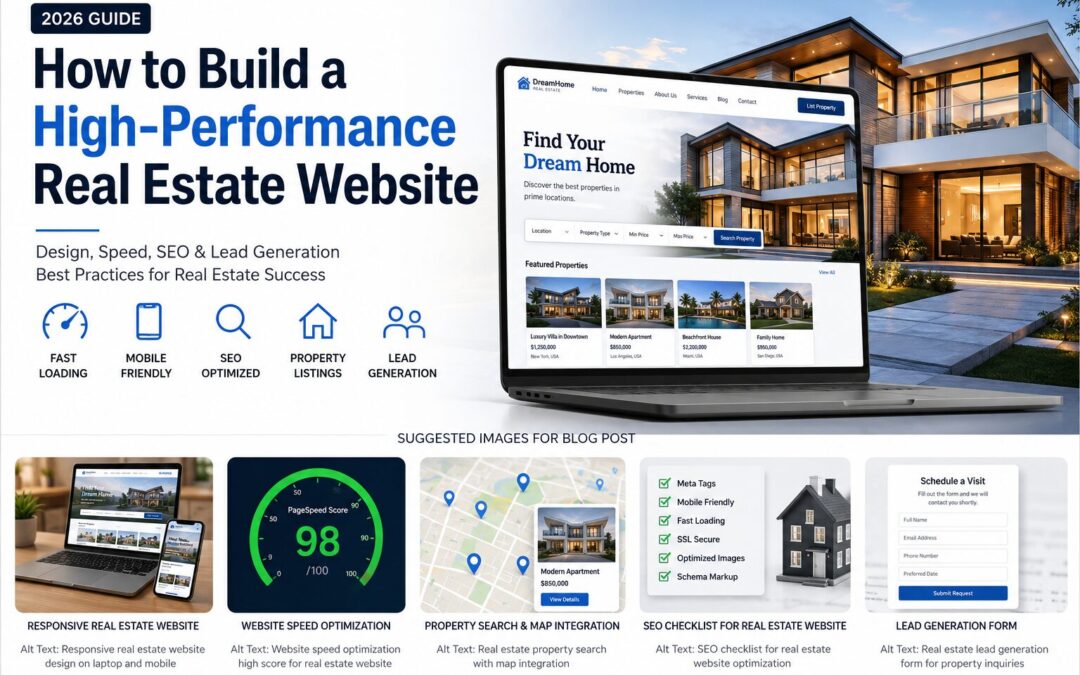
Today’s real estate buyers begin their property search online. Whether they’re looking for apartments, luxury villas, commercial spaces, or investment properties, your website is often their first interaction with your business.
A slow-loading, outdated, or difficult-to-navigate website can quickly drive potential buyers to competitors. On the other hand, a fast, SEO-optimized, and user-friendly real estate website helps you build trust, showcase properties effectively, and convert visitors into qualified leads.
In this guide, you’ll learn how to build a high-performance real estate website that delivers speed, excellent user experience, strong Google rankings, and better conversion rates in 2026.
Why Website Performance Matters
Website speed directly impacts:
Search rankings
User experience
Lead generation
Bounce rate
Conversion rate
Mobile usability
Brand trust
Research consistently shows that visitors expect websites to load within a few seconds. Every additional delay can reduce engagement and increase the likelihood that users leave before viewing your listings.
For real estate businesses, every missed visitor could represent a lost buyer, seller, or investor.
Essential Features Every High-Performance Real Estate Website Needs
Advanced Property Search
A powerful search system should allow users to filter properties by:
Location
Budget
Property type
Bedrooms
Bathrooms
Area
Amenities
Ready-to-move or under-construction
Furnished or unfurnished
This helps visitors quickly find properties that match their needs.
Mobile-First Design
More than half of property searches happen on smartphones. Your website should provide a seamless experience across all screen sizes with:
Responsive layouts
Touch-friendly navigation
Fast-loading images
Readable typography
Easy contact options
A mobile-friendly design also supports better search visibility.
High-Quality Property Images and Videos
Professional visuals are essential in real estate marketing. Include:
High-resolution galleries
Virtual tours
Drone footage
Video walkthroughs
Interactive floor plans
Optimize all media to maintain fast loading speeds without sacrificing quality.
Lead Capture Forms
Your website should make it easy for visitors to inquire about properties. Effective lead capture elements include:
Property inquiry forms
Instant callback requests
WhatsApp integration
Live chat
Schedule-a-viewing forms
Mortgage inquiry forms
Keep forms short to encourage more submissions.
Google Maps Integration
Interactive maps allow users to explore neighborhoods, nearby schools, hospitals, shopping centers, and public transport, making it easier to evaluate a property’s location.
SEO-Friendly Architecture
Organize your website with clear navigation and dedicated pages for property types, cities, neighborhoods, and services. Use descriptive URLs, internal linking, optimized headings, and structured data to help search engines understand your content.
Core Web Vitals Optimization
Google values websites that offer excellent performance. Improve Core Web Vitals by:
Compressing images
Using modern image formats
Implementing lazy loading
Reducing unused JavaScript and CSS
Leveraging browser caching
Using a Content Delivery Network (CDN)
Regularly test your site using performance tools and address any issues that affect loading speed.
Property Listing Management
A robust content management system should allow agents to:
Add new listings
Update prices
Mark properties as sold or rented
Upload media
Manage featured properties
Keeping listings current improves user trust and search relevance.
Trust Signals
Include client testimonials, certifications, awards, partner logos, and case studies. These elements reassure visitors and can improve conversion rates.
Security and Reliability
Protect user data by implementing HTTPS, secure hosting, regular backups, software updates, and spam protection. A reliable website builds confidence with both users and search engines.
Content Marketing
Support your website with valuable content such as neighborhood guides, buying and selling tips, market updates, investment insights, and financing advice. Publishing helpful content can attract organic traffic and establish your expertise.
Common Mistakes to Avoid
Slow-loading pages
Poor mobile usability
Outdated property listings
Weak calls to action
Large unoptimized images
Confusing navigation
Thin or duplicate content
Missing local SEO optimization
Ignoring analytics and user behavior
Conclusion
Building a high-performance real estate website involves much more than attractive design. By focusing on speed, user experience, search engine optimization, lead generation, and ongoing maintenance, you can create a platform that not only showcases properties but also helps grow your business.
As online competition continues to increase, investing in a fast, secure, and user-focused website will help you stand out, improve search visibility, and convert more visitors into clients.
Frequently Asked Questions
What is a high-performance real estate website?
A high-performance real estate website is optimized for speed, usability, mobile responsiveness, SEO, and lead generation, helping users find properties quickly and encouraging inquiries.
Why is website speed important for real estate?
Fast-loading websites reduce bounce rates, improve user experience, and support better search engine rankings, increasing the chances of generating qualified leads.
Which platform is best for a real estate website?
The ideal platform depends on your needs. WordPress with a reliable real estate theme or custom development offers flexibility, while larger agencies may benefit from tailored solutions with MLS or IDX integrations.
How can I improve SEO for my real estate website?
Focus on creating location-specific content, optimizing property pages, improving page speed, using structured data, and earning quality backlinks from relevant industry websites.
Tags: Real Estate Website, Real Estate Website Design, Real Estate Website Development, Property Website, Realtor Website, Real Estate Marketing, SEO, Technical SEO, Website, Speed, Core Web Vitals, WordPress, UX Design, Responsive Design, Lead Generation, Property Listings, IDX Integration, MLS Integration, Digital Marketing Web Development Website Optimization
In today’s digital landscape, having a robust online presence is crucial for any business. One of the most effective tools for achieving this is a well-designed landing page. In this blog post, we will explore why developing landing pages is essential for businesses and the numerous benefits they offer.
What is a Landing Page?
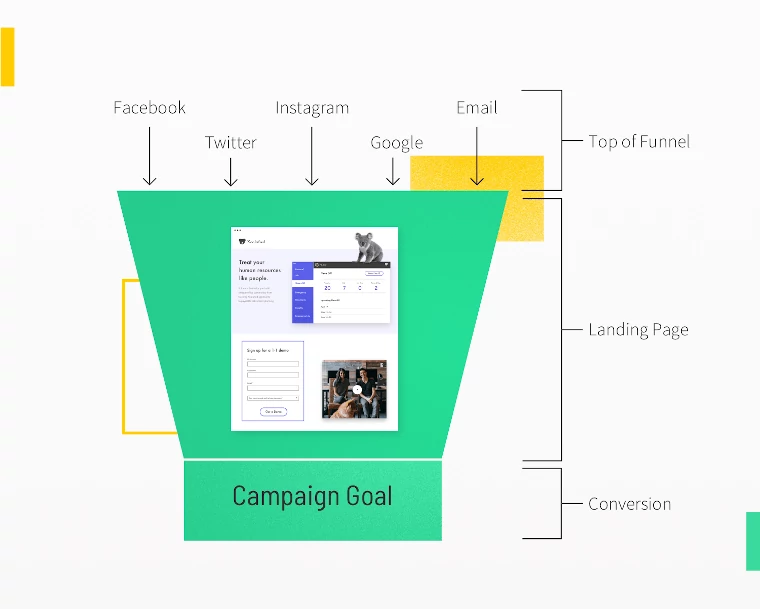
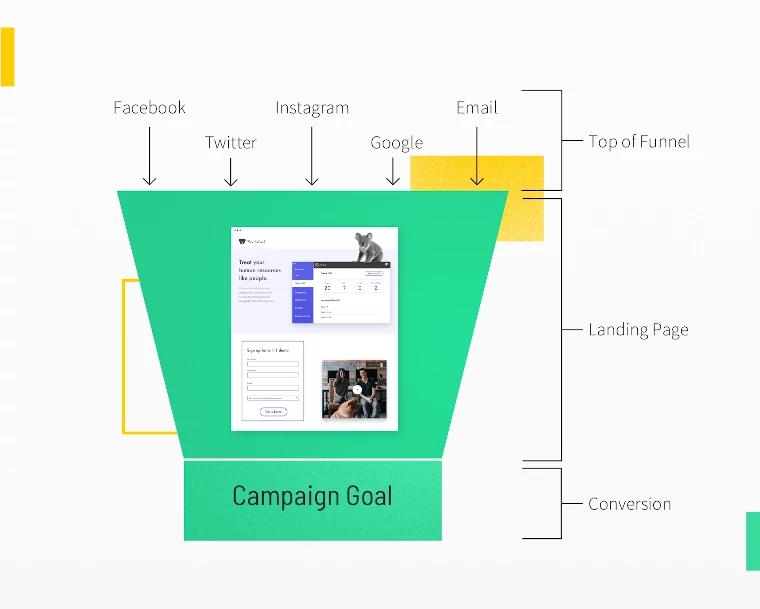
A landing page is a standalone web page created specifically for a marketing or advertising campaign. It’s where a visitor “lands” after they click on a link in an email, or ads from Google, Bing, YouTube, Facebook, Instagram, Twitter, or similar places on the web. Unlike typical web pages, which have many goals and encourage exploration, landing pages are designed with a single focus or goal, known as a call to action (CTA).
Targeted Lead Generation: Landing pages are a powerful tool for capturing leads. By tailoring the content to a specific audience segment, you can create highly targeted offers that resonate with potential customers. This increases the likelihood of conversions as visitors are presented with relevant and compelling information that encourages them to take action.
Increased Conversion Rates: Because landing pages are designed with a single objective, they minimize distractions and guide visitors toward a clear call to action. This streamlined approach significantly boosts conversion rates compared to a typical web page. Whether the goal is to collect email addresses, encourage sign-ups, or drive sales, a well-crafted landing page can deliver impressive results.
Enhanced User Experience: Landing pages are crafted to provide a seamless and engaging user experience. They are often visually appealing, easy to navigate, and contain concise, relevant information. This positive user experience not only increases the chances of conversion but also helps build trust and credibility with your audience.
Effective Campaign Tracking and Analysis: Landing pages make it easier to track and analyze the performance of your marketing campaigns. By using tools like Google Analytics, you can monitor key metrics such as visitor behavior, conversion rates, and ROI. This data-driven approach enables you to optimize your campaigns and make informed decisions to improve future results.
Benefits of Landing Pages
Cost-Effective Marketing: Developing landing pages is a cost-effective way to market your business. Unlike traditional advertising methods, digital marketing campaigns with targeted landing pages can reach a larger audience at a fraction of the cost. This ensures a higher return on investment (ROI) and better allocation of your marketing budget.
Improved SEO and Search Rankings: Optimizing landing pages for relevant keywords can improve your website’s SEO and search engine rankings. By focusing on specific keywords related to your business, you can attract organic traffic from search engines. This not only drives more visitors to your site but also increases the chances of converting them into customers.
Better Customer Insights: Landing pages provide valuable insights into customer preferences and behavior. By analyzing the data collected from these pages, you can gain a deeper understanding of what your audience is looking for. This information can be used to refine your marketing strategies and tailor your offerings to meet customer needs more effectively.
Flexibility and Adaptability: Landing pages are highly flexible and can be quickly adapted to suit different campaigns and objectives. Whether you are launching a new product, promoting a special offer, or running a seasonal campaign, landing pages can be customized to align with your goals. This adaptability ensures that your marketing efforts remain relevant and effective.
Conclusion
Developing landing pages is a crucial strategy for any business looking to enhance its online presence and drive conversions. With their ability to generate targeted leads, increase conversion rates, and provide valuable customer insights, landing pages offer numerous benefits that can significantly impact your business’s success. By leveraging the power of optimized landing pages, you can create a more engaging and effective digital marketing strategy that delivers tangible results.
Looking to elevate your business with a custom landing page? We’re here to help! Reach out to us at [email protected] and you can go contact page for tailored design and development solutions.
Freelance Web developer, graphic designer & digital Marketer Hard work day to day life
As a freelancer in the web development, graphic design, and digital marketing field, my daily life would likely involve a combination of the following tasks:
Web development: Writing and testing code to create, maintain, and update websites.
Graphic design: Creating visual designs for websites, logos, advertisements, and other marketing materials.
Digital marketing: Planning and executing digital marketing campaigns, including email marketing, social media marketing, and search engine optimization (SEO).
Client communication: Interacting with clients to understand their needs, provide updates on projects, and address any concerns or questions.
Project management: Keeping track of deadlines, and budgets, and ensuring that projects are completed on time and within scope.
Continuing education: Staying up to date with the latest industry trends and advancements in technology, in order to offer the best services to clients.
Overall, a day in the life of a web developer, graphic designer, and digital marketer freelancer would involve a mix of creative, technical, and business tasks, with a focus on delivering high-quality work for clients.
If you’re looking for a reliable and experienced web developer, I would love to hear from you. Let’s work together to bring your online vision to life!
Facebook
Linkedin
Twitter
Pinterest
Telegram
Whatsapp
Reddit
Request A Free Quote
Office Address:
3rd Floor, Noora Complex, Maisuma, Lal Chowk, Srinagar, Jammu and Kashmir, India - 190001
Content marketing: A straightforward guide to explaining content marketing to a new team member
By Haika Shah
What is content marketing?
Content marketing is a marketing system used to draw in, connect with, and hold a group of people by making and sharing important articles, recordings, webcasts, and different media. This approach lays out skills, advances brand mindfulness, and keeps your business top of the psyche when now is the right time to purchase what you sell.
Definition of content marketing:
Content marketing is a strategic marketing approach focused on creating and distributing valuable, relevant, and consistent content to attract and retain a clearly-defined audience — and, ultimately, to drive profitable customer action.
There are various kinds of content marketing, including:
⦁ Contributing to a blog ⦁ Video ⦁ Podcasting ⦁ Infographics ⦁ Email ⦁ Visual content ⦁ Digital books/eBooks ⦁ Lead magnets ⦁ Whitepapers ⦁ SlideShare introductions/Presentations ⦁ Tests/instruments/Quizzing ⦁ Courses ⦁ Webinars ⦁ Slide decks ⦁ Free applications ⦁ Social media posts and more The key is that the content gives data or amusement, typically for free, on the side of a business objective.
The following are four things that numerous organizations need to escape their content marketing endeavours:
⦁ Directing traffic to the landing page ⦁ Spreading brand mindfulness ⦁ Building connections ⦁ Acquiring income ⦁ Creating social offers and backlinks